MDM, PIM, and Graph, built natively on Databricks.
Still moving master data outside your Databricks environment to make it usable? The LakeFusion and Databricks partnership brings matching, survivorship, stewardship, MDM, PIM, and Graph directly to your Unity Catalog tables under the governance you already have.
Point it at your tables and go. No data movement. No bolt-on infrastructure. No second copy of your master data to secure.
Available on:


If your team already runs Databricks, LakeFusion drops right in. It works on the governed lakehouse data you already trust and follows your security model.
No data movement. No bolt-on tools. Runs against Unity Catalog tables with the same governance and access controls you use today.
LLMs and vector search work together to unify, classify, and clean records. Fast, accurate, and no long rule-writing sessions.
Validation, trust scoring, and lineage are built into the product. The data that feeds your AI work is ready, and you can show the proof.
From data leaders to product teams, LakeFusion gives every stakeholder one Databricks-native foundation to master, govern, connect, and activate trusted enterprise data.
Turn fragmented enterprise data into a governed foundation that supports analytics, operations, AI, and growth without adding another disconnected data-management stack.
Replace manual reconciliation and legacy MDM workflows with intelligent matching, stewardship, golden records, lineage, and governance directly on Databricks.
Give models, dashboards, and AI agents trusted entities and relationship context, not duplicate, conflicting, or incomplete source-system records.
Keep MDM, PIM, and Graph aligned with your lakehouse architecture, Unity Catalog governance, and existing Databricks security model without another infrastructure layer.
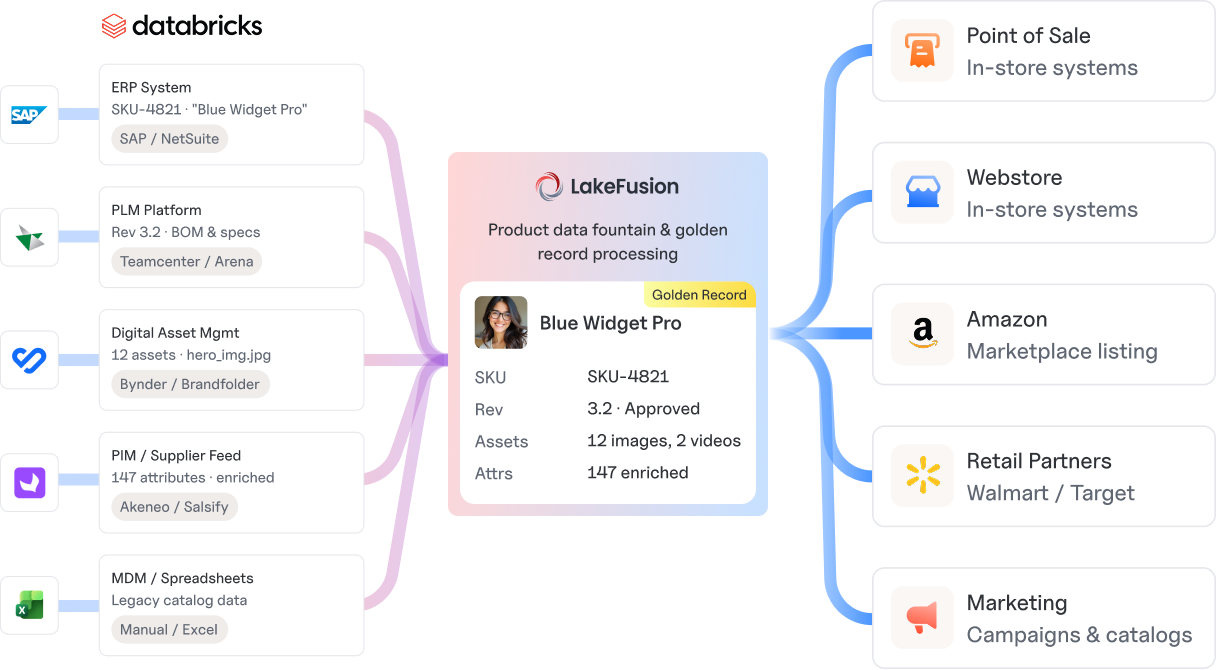
Manage trusted product identities, taxonomies, attributes, enrichment, and channel-ready information on the same governed Databricks foundation.
Databricks MDM means running Master Data Management jobs inside the Databricks environment. LakeFusion applies matching, survivorship, stewardship, golden records, and governance directly to governed lakehouse data.
Yes. LakeFusion runs inside the customer’s Databricks workspace and works against Unity Catalog tables. Companies master their data without standing up a separate external MDM store.
No. LakeFusion keeps the mastering work inside the Databricks environment. That cuts out extra data movement, duplicate copies, and more infrastructure to secure and govern.
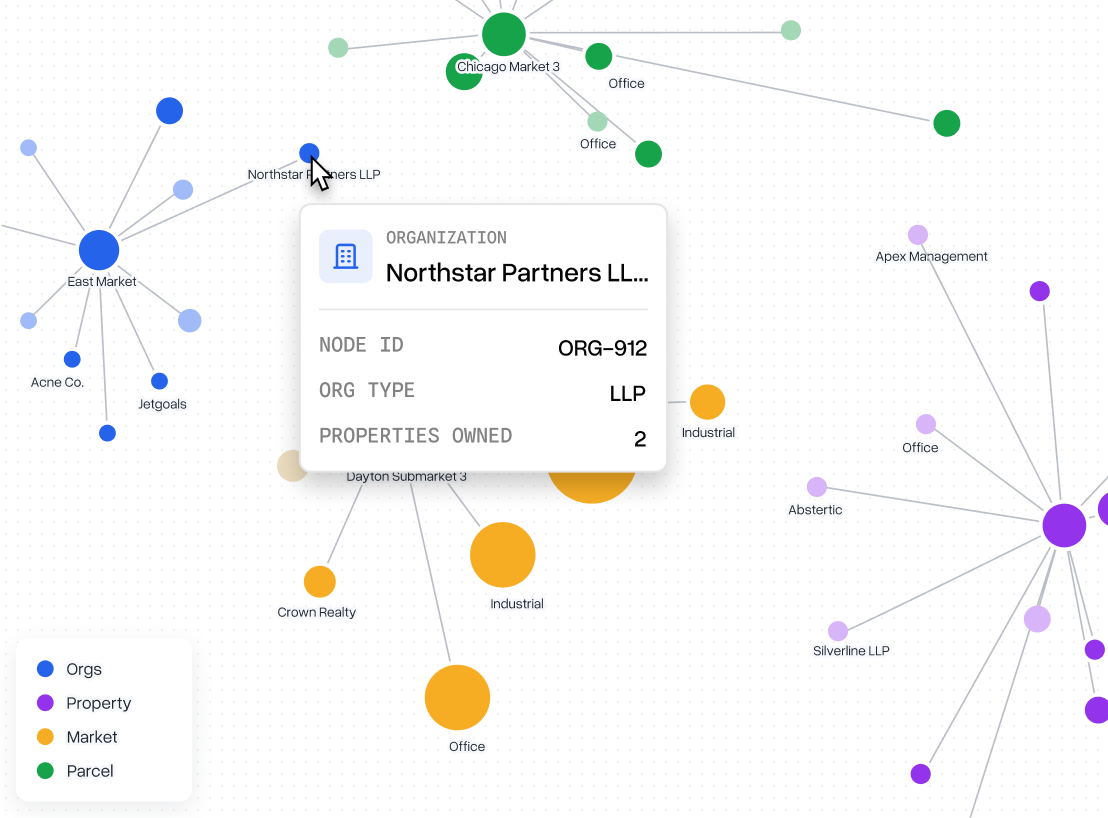
LakeFusion brings MDM, PIM, and Graph Intelligence together on one Databricks-native foundation. Teams get trusted master data, governed product information, and clear enterprise relationship intelligence.
LakeFusion works with data already governed through Unity Catalog. Matching, survivorship, stewardship, and the rest of the workflows stay inside the same governance and access model the company already uses in Databricks.
Yes. LakeFusion builds governed golden records, trusted product information, and relationship context. Analytics tools, applications, and AI agents can use those records instead of messy or conflicting source-system data.






.png)