
LakeFusion is master data management that runs natively in your Databricks environment. Match and merge records from every source system into governed golden records for customer, product, and every other domain. See how they connect and why each one matched. All with zero data egress.
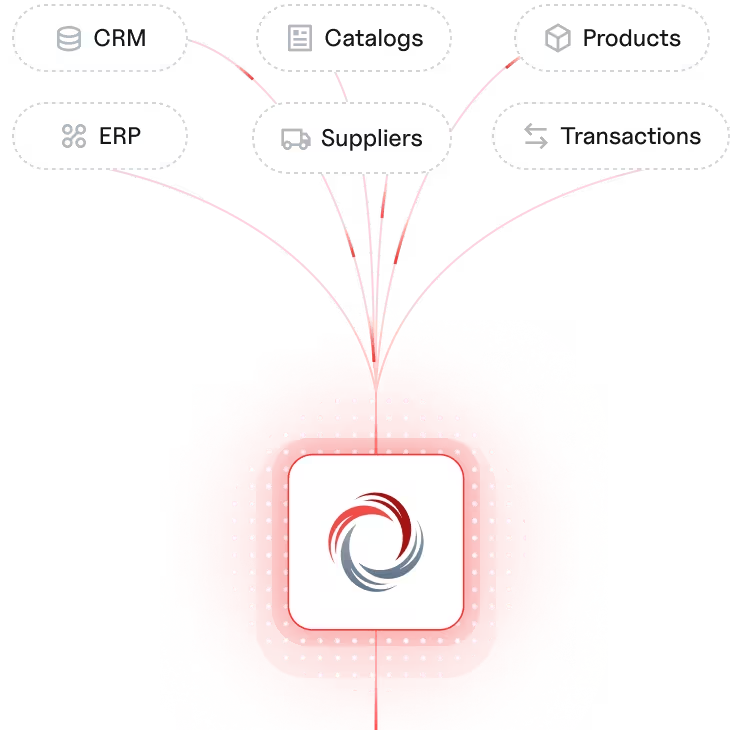
Architecture should build trust, not pile on more infrastructure. LakeFusion is an Enterprise Data Management Platform and Enterprise Data Management Software that is native to Databricks. It brings master data, product information and relationship intelligence into your enterprise data, which resides in the Databricks lakehouse, and provides Databricks Data Management Platform capabilities and Databricks-Native Data Management.
You can resolve fragmented entities, create governed Golden Records, enrich complex product data and surface connected relationships without adding yet another disconnected data stack. With AI-assisted matching, Unity Catalog Governance and Databricks-native execution, this AI-Ready Enterprise Data Platform and Trusted Enterprise Data Platform turns scattered enterprise data into a trusted base for analytics, operations and AI at scale.
Enterprise trust needs more than marketing claims. LakeFusion runs inside the Databricks ecosystem as a Governed Enterprise Data Platform, supports AWS and Azure deployments, and keeps your Trusted Enterprise Data governed inside your own environment through Lakehouse Data Management and Lakehouse-Native Data Management.
Trusted by global teams
Databricks-Native
Architecture
Available Through Cloud Marketplace Motions
AWS & Azure Deployment Support
Unity Catalog Governed
Enterprise-Grade Security Architecture
Proven Customer 360 & Golden Record Implementations
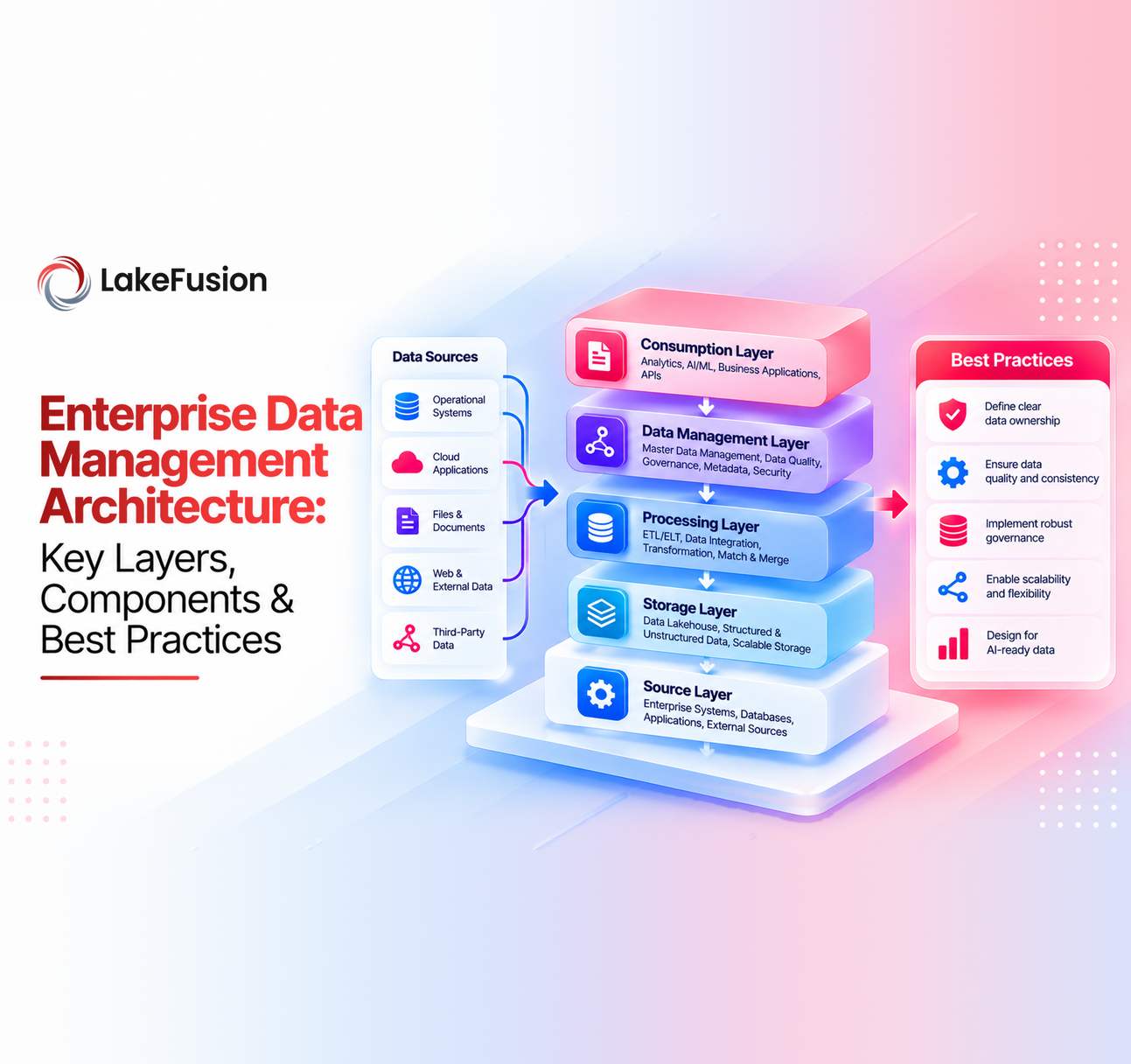
Stop handling entities, products and relationships through separate data stacks. LakeFusion pulls Master Data Management, Product Information Management and Graph Intelligence together on one governed Databricks-native foundation. It also supports Multidomain MDM, Data Stewardship, Data Quality and Relationship Intelligence as part of a complete Enterprise Data Intelligence Platform.
Fragmented records create duplicate identities and unreliable data. LakeFusion Master Data Management uses AI-assisted Entity Resolution, survivorship and Data Stewardship to build governed Golden Records right in Databricks.
Disconnected records hide important enterprise relationships. LakeFusion Graph Intelligence models hierarchies, ownership structures and multi-hop connections right in Databricks for richer Relationship Intelligence.
Disconnected catalogs lead to inconsistent product data. LakeFusion Product Information Management standardizes, enriches and governs SKUs, attributes and catalogs across channels directly inside Databricks.
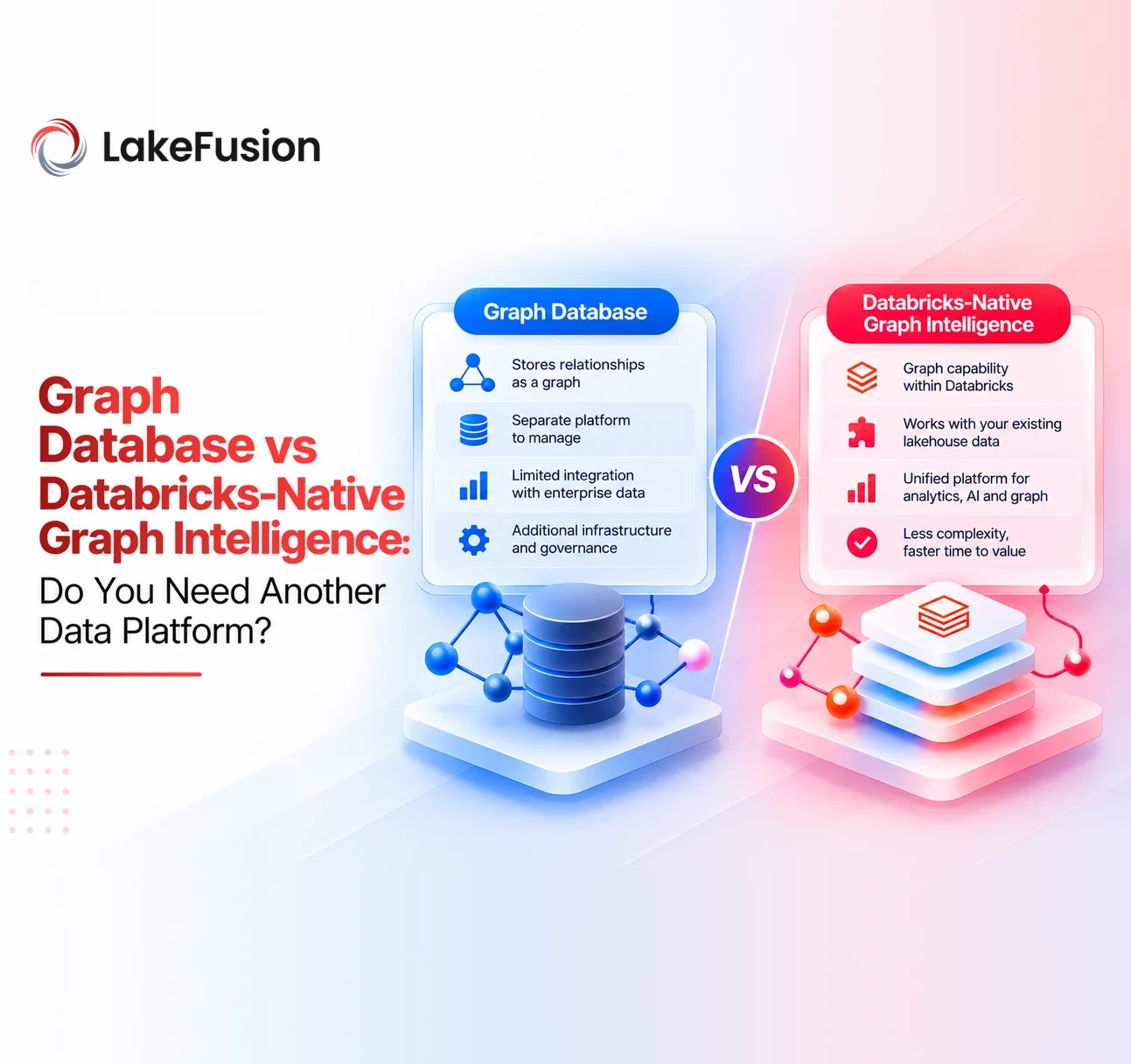
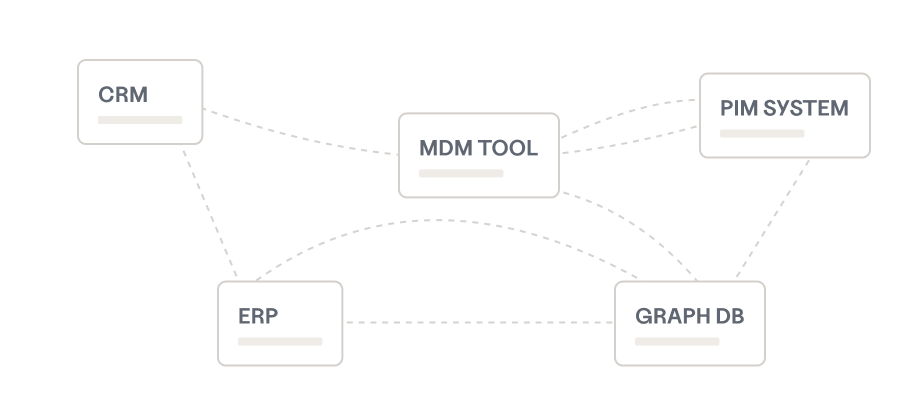
Traditional enterprise data management usually means adding another platform, another data copy and another sync layer. LakeFusion brings Enterprise Data Management on Databricks and Databricks-native data management onto the governed lakehouse instead.
Keep master, product and relationship data where it already lives. LakeFusion works with governed Databricks data in place through Lakehouse data management, cutting unnecessary replication, data egress and sync across separate platforms.
Extend the governance model your teams already use. LakeFusion works with Unity Catalog Governance, so permissions, lineage and controlled access stay intact across the Trusted Enterprise Data products it creates.
Stop building pipelines just to move data in and out of another MDM stack. Databricks-native data management cuts the integration layers needed to keep mastered data in sync.
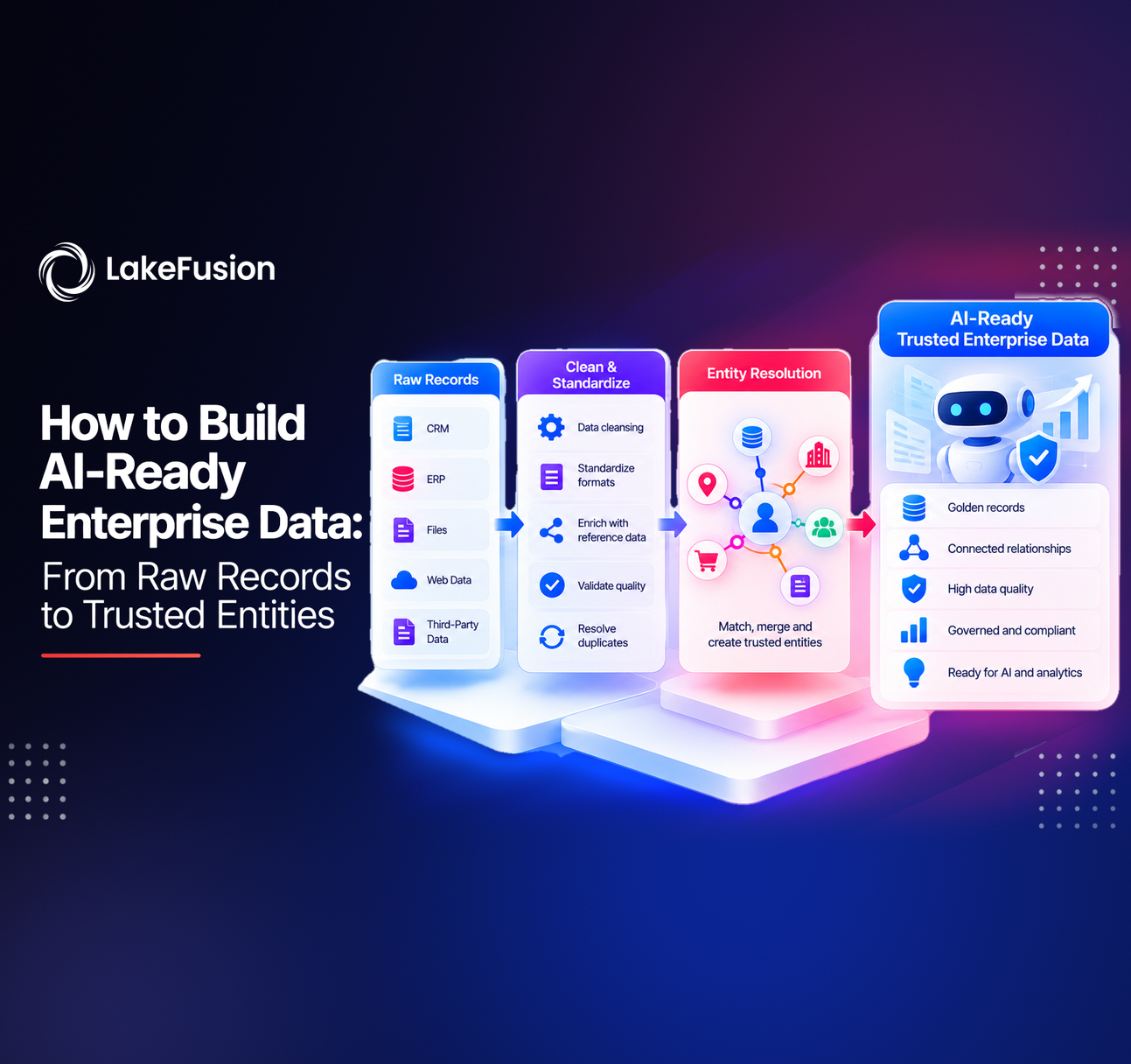
Turn fragmented operational data into trusted entities, products and relationships that analytics and AI workloads can use with more consistency, context and governance across the Databricks lakehouse. This creates AI-Ready Enterprise Data that downstream systems can rely on.
Consolidate mastering, governance and Relationship Intelligence around the lakehouse you already have. LakeFusion reduces the need for separate MDM infrastructure, external graph systems and extra data-management layers while delivering Trusted data on Databricks.
Enterprise data problems rarely sit alone. LakeFusion resolves fragmented identities, customer records and supplier masters directly on Databricks, creating Trusted Enterprise Data without adding another disconnected repository.
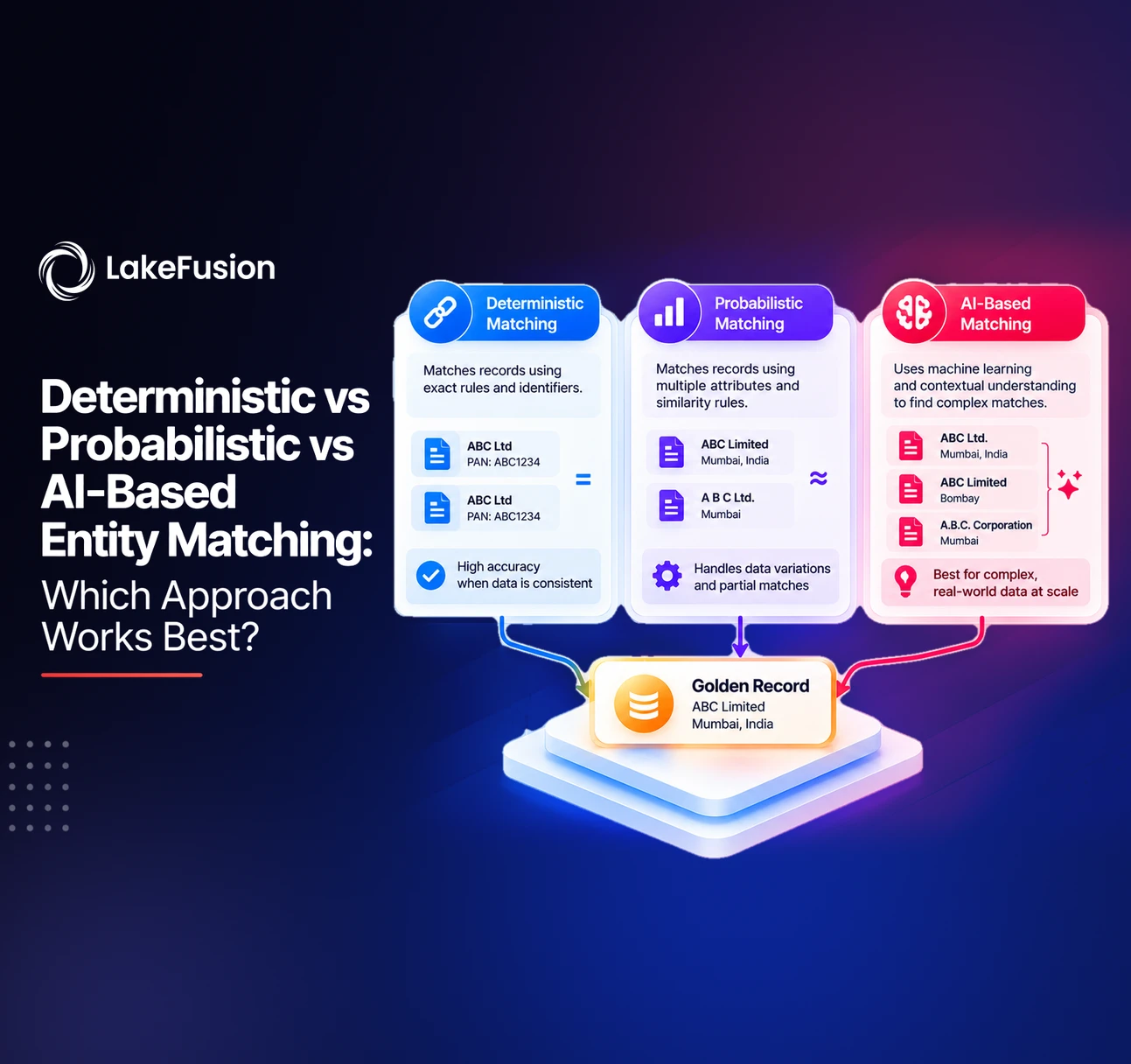
Duplicate and inconsistent entities break analytics, workflows and AI. LakeFusion uses intelligent Entity Resolution, Entity Matching, Record Matching, Data Deduplication and Match and Merge to connect customer, supplier, company and other records across fragmented systems.
ExploreCRM, ERP and operational systems rarely agree on the same customer. LakeFusion builds a governed Customer 360 by resolving fragmented identities through Customer Entity Resolution and Customer Data Unification into a trusted Customer Golden Record with lineage across enterprise sources.
ExploreDuplicate vendors, inconsistent names and disconnected hierarchies create procurement risk and noisy reporting. LakeFusion standardizes Supplier Master Data, supports Supplier Master Data Management and Supplier MDM, resolves supplier identities and creates governed Supplier Golden Record across ERP and procurement environments through Supplier Data Management.
ExploreFrom fragmented source records to governed enterprise data, LakeFusion follows a structured Databricks-native workflow that helps teams connect, resolve, govern, enrich and operationalize Trusted Enterprise Data at enterprise scale.
Connect Enterprise Data Where It Already Lives
Connect existing CRM, ERP, catalog, supplier, operational and Databricks datasets without adding an unnecessary external mastering layer.
Profile Data Quality Before Mastering Begins
Check completeness, consistency, duplication and Data Quality patterns to see where fragmented records and attributes are hurting enterprise data trust.
Match Fragmented Records with Intelligent Entity Resolution
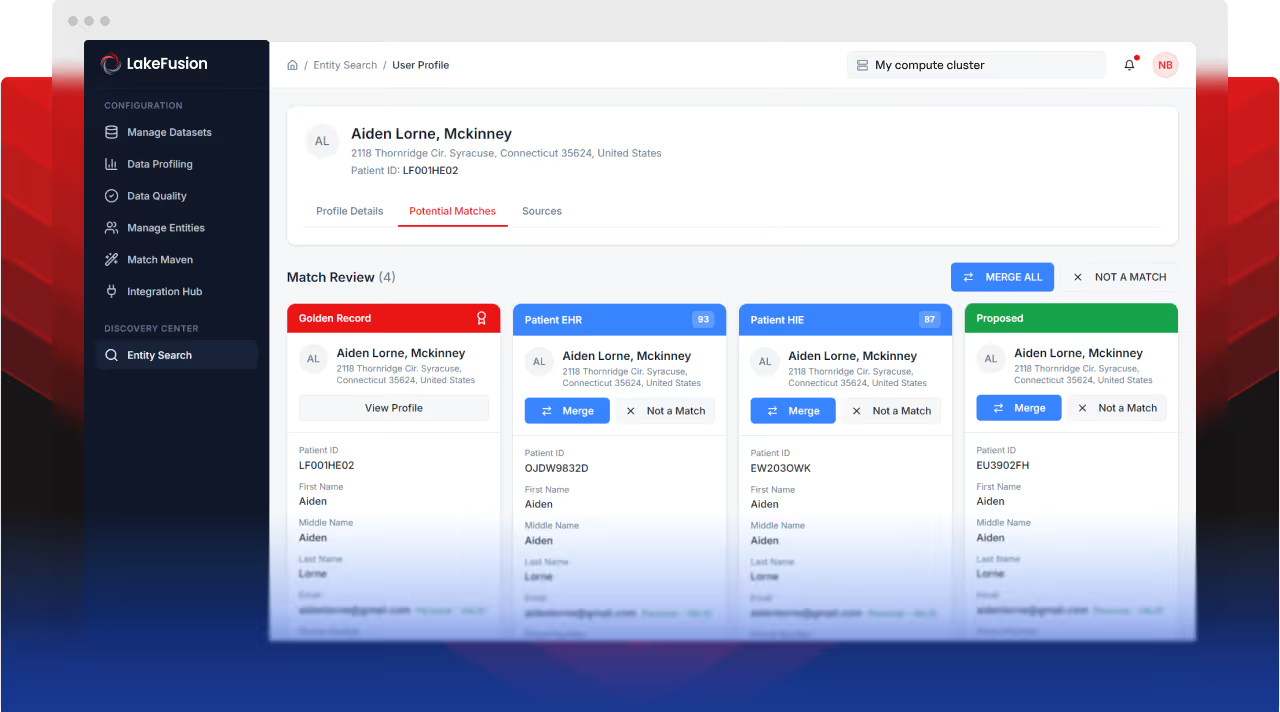
Apply AI-assisted matching and configurable resolution logic to spot duplicates, reconcile entities and build trusted connections across fragmented enterprise datasets using Entity Matching, Record Matching and Match and Merge.
Govern Decisions with Stewardship and Unity Catalog
Apply survivorship, Data Stewardship, lineage and Unity Catalog Governance so mastered records stay controlled, explainable and aligned with enterprise access policies.
Enrich Records into Trusted Enterprise Data
Standardize, validate and enrich master and product information to create higher-quality Golden Records and governed data products ready for wider enterprise use.
Operationalize Trusted Data Across Enterprise Workloads
Make governed entities, products and relationships available to downstream applications, analytics, reporting and AI workloads without rebuilding the data foundation somewhere else. This delivers AI-Ready Enterprise Data and Trusted data on Databricks.
Resolve customers, accounts, counterparties, KYC records, risk data and hierarchies into governed enterprise entities that strengthen Customer 360, compliance workflows, risk analytics and operational decisions.
ExploreConnect patients, providers, facilities, assets and clinical data across fragmented systems to establish governed identities and Trusted Enterprise Data for analytics, operations and data-heavy healthcare workflows.
ExploreConnect a unified supply base, material, products, assets, plants and customers across ERP, PLM and operational systems, and generate governed manufacturing data for analytics, supply-chain visibility and everyday activities.
ExploreConnect products, SKUs, suppliers, customers, catalogs and inventory into one source for product and customer intelligence used for commerce, supply-chain, merchandising, analytics and omnichannel operations.
ExploreEnterprise teams use LakeFusion to improve accuracy, reduce manual reconciliation, create governed data foundations for analytics, compliance, & AI.
.webp)
Consolidate company-name variants so experts can be organized and matched by employer
.webp)
Global 360-degree view, search-before-create, and product rationalization

Identify whether incoming leads are new or existing customers
.webp)
Customer 360 and Company Master

Company Master and Entity Resolution
By unifying, governing, standardizing and operating critical data across several business systems, an Enterprise Data Management Platform allows organizations to ensure that data analytics, data applications, data operations and AI can leverage more consistent and Trusted Enterprise Data.
LakeFusion is built around the Databricks lakehouse instead of forcing you to maintain a separate MDM environment. It delivers Enterprise Data Management on Databricks so mastering, governance and Relationship Intelligence stay closer to the data already managed in Databricks.
Databricks-native data management means LakeFusion works directly against data inside the Databricks environment, using the lakehouse as the foundation for Master Data Management, Product Information Management, Graph Intelligence and Relationship Intelligence.
LakeFusion is designed to process customer data inside the customer’s Databricks and cloud environment. Source data, processed data and Golden Records stay under the customer’s existing infrastructure and governance controls.
LakeFusion uses Unity Catalog Governance inside the Databricks environment so mastered data can stay aligned with existing access controls, lineage and governance policies instead of adding a separate governance layer.
LakeFusion uses Entity Resolution, intelligent matching, Match and Merge logic, survivorship rules, Data Stewardship workflows and lineage to reconcile fragmented source records into governed Golden Records.
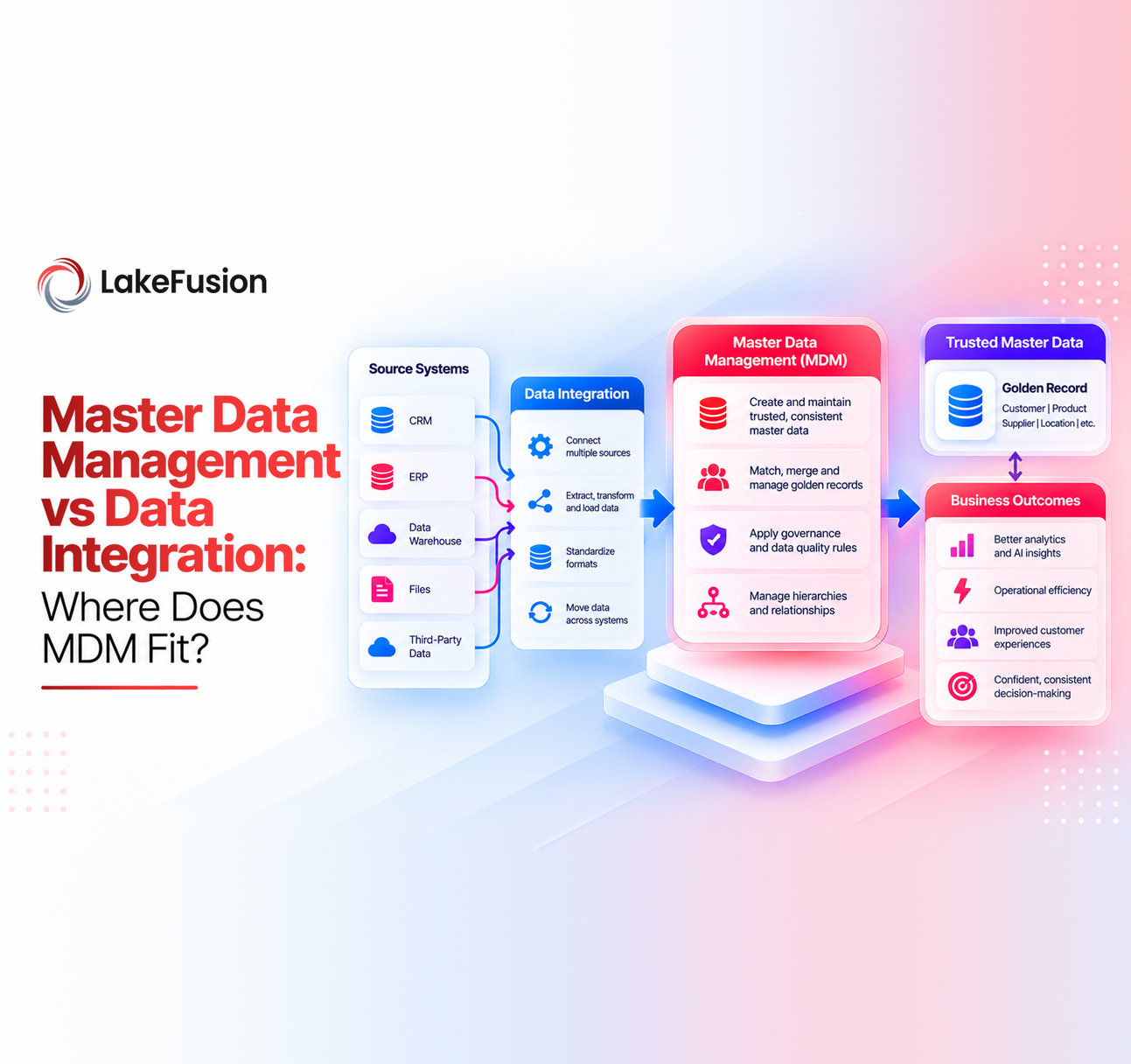
Master Data Management governs core enterprise entities. Product Information Management manages and enriches product information. Graph Intelligence models relationships, hierarchies and networks between entities. LakeFusion brings all three onto one Databricks-native foundation as part of a Multidomain MDM approach.
Yes. LakeFusion can resolve customer identities across CRM, ERP, billing and other enterprise sources through Customer Entity Resolution and Customer Data Unification to create a governed Customer 360 and trusted Customer Golden Record directly in Databricks.
LakeFusion improves the entities, product records and relationships that feed AI by resolving duplicates, standardizing information, applying governance and creating traceable trusted records before downstream AI workloads use them. This produces AI-Ready Enterprise Data.






.png)